Rituals of Risk: The Casino as Contemporary Ceremony
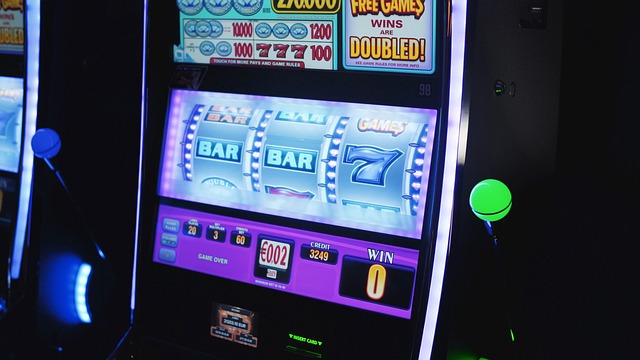
The casino is not merely a place of entertainment. It operates as a ritual structure—a modern site where repetition, chance, and symbolic gestures intersect to form a controlled experience of uncertainty. While it lacks temples or incense, the casino mirrors ancient patterns of ceremonial design: entry, immersion, offering, judgment, and return.
Unlike older rituals centered on transcendence, the casino ritual is internal. It doesn’t lift the participant upward. It draws them inward—into a self-contained system governed by rhythm and anticipation. Platforms like HellSpin carry this ritual logic into digital form, translating spatial thresholds into interface sequences, and material stakes into symbolic metrics.
Here, engagement is structured not by belief, but by repetition. What is worshipped is not fate—it is flow.
The Architecture of Contained Chaos
Every ritual needs contrast—between order and disruption, structure and unpredictability. The casino delivers this through curated randomness. Outcomes are uncertain, but the environment is constant. The space holds tension without releasing it. Machines, tables, lights: all remain steady while luck is left to fluctuate.
This paradox is essential. If results were predictable, the ritual would lose meaning. If the setting were unstable, it would lose credibility. Instead, the system delivers instability within form, offering the illusion of chaos wrapped in the continuity of routine. This keeps the player suspended, neither confirmed nor dismissed.
Tokens, Gestures, and the Sacred Object
What used to be candles or chants are now chips, cards, and button presses. These are not just game mechanics—they are ritual objects. The spin is a gesture. The hand placed on a table is a signal. The bonus wheel is a modern totem.
Even online, the object survives in translation. Digital tokens retain symbolic weight. The moment of wager, though virtual, still marks transition. The user crosses a threshold, even without moving. The interface becomes an altar—not in belief, but in behavior.
Repetition as Transformation
Like all rituals, the casino depends on repetition. One spin means nothing. But ten? Fifty? A session of two hours? The meaning doesn’t come from one act. It comes from accumulation. The player is changed not by the result of one moment, but by their repetition over time.
This structure doesn’t resolve. It sustains. The ritual never ends. It loops. And within the loop, players begin to develop private myths: “My lucky number,” “This machine always pays,” “It’s just a matter of time.” These are not beliefs in probability. They are beliefs in patterned chance—the idea that meaning can emerge from rhythm.
The Community of Parallel Solitudes
A ritual doesn’t always require a shared script, only a shared structure. In the casino, players may not speak, but they act together. They follow the same steps, engage in similar cycles, react to the same sounds. This forms a community—not of identity, but of synchronized behavior.
Digital platforms preserve this. Multiple players spin simultaneously. Live games replicate group dynamics. The chat scrolls, even if few respond. The player may feel alone, but they are not solitary. They’re part of an invisible group, each repeating the same ritual in parallel.
No Exit, Just Pause
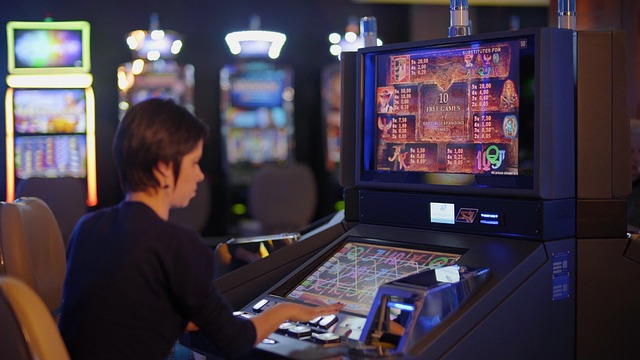
In traditional rituals, there is a final gesture. A blessing. A closing. In the casino, that closure rarely comes. There’s no grand finale. Only fatigue. The ritual ends not when meaning is complete, but when the player steps away—voluntarily or otherwise.
But even then, the structure lingers. The loop remains open. The interface remembers. The space, whether physical or digital, is always ready to resume.
The ritual does not need belief. It only needs return.
Temporal Suspension and the Ritual of Non-Resolution
Unlike traditional ceremonies that culminate in catharsis or revelation, the casino ritual is defined by its suspension of narrative closure. Time is not linear here—it is recursive, constructed through the repetition of micro-acts that defer meaning rather than resolve it. The system does not require the player to arrive anywhere; it requires them to remain in motion. This deliberate avoidance of finality is not a flaw—it is the ritual’s structural core. Transformation is never marked by conclusion, only by duration. In this sense, the act of play becomes a liturgy of delay, where significance accrues not through outcome but through continued engagement within a space that simulates decision without demanding exit.